

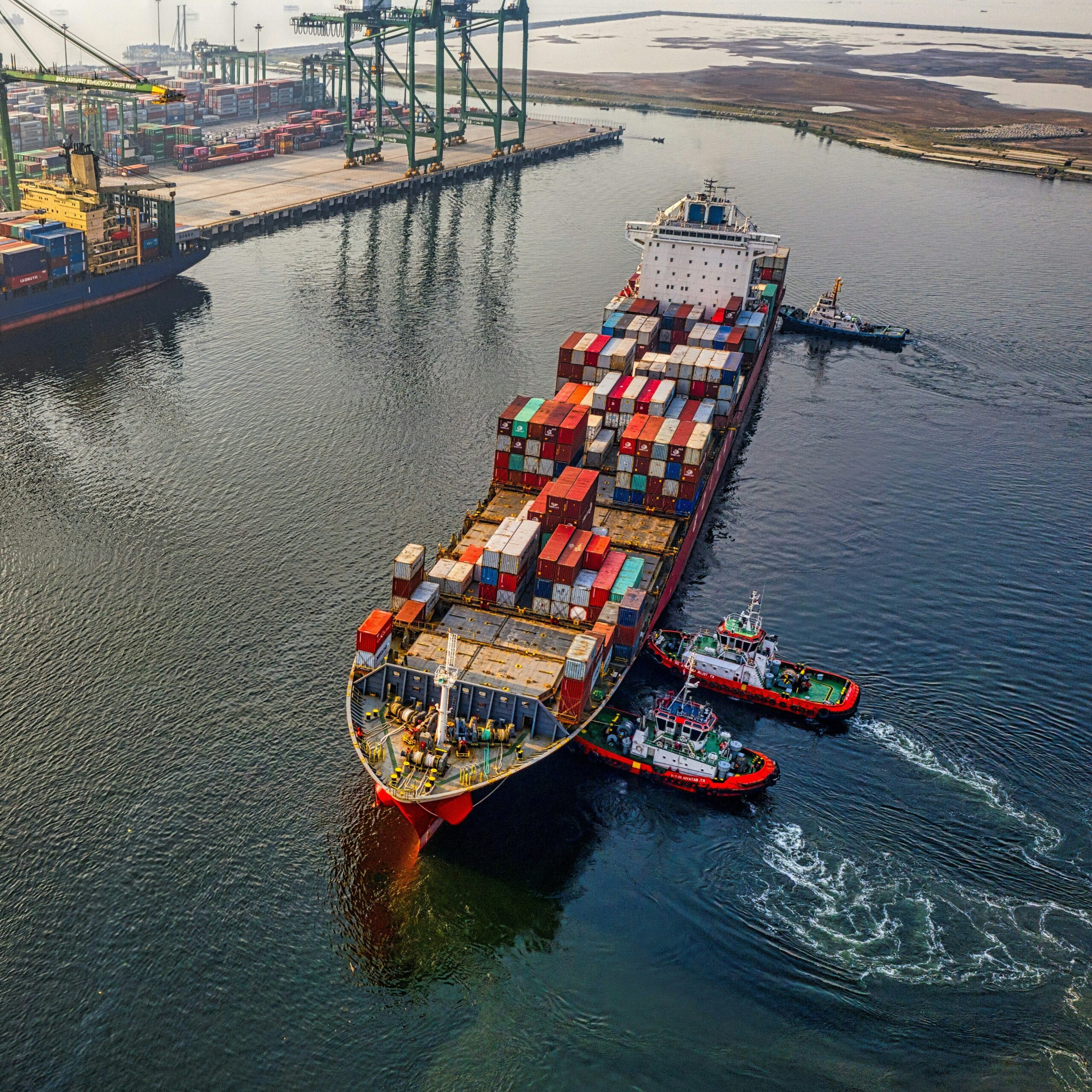
SHIP ARREST IN SPAIN FOR BUNKER’S SUPPLY – CASE LAW.
Case study:
A Chinese shipowner of container vessels time chartered one of his ladies (Chinese flag) to a European company. Charterer got into financial difficulties and did not honor several bunker supplies to different companies around the world.
In each supply, Captain had signed the bunker delivery note, as customary.
Vessel happened to call at the port of Valencia, where she was arrested for two different claims for unpaid bunker invoices. Those invoices had been addressed, as customary, to:
“The vessel / Master / Owner / Manager / Operator / Time charterer with its full details.”
In both cases, after releasing the arrest by putting up the relevant security, the shipowner filed an opposition for wrongful arrest, advised by our partner, Alicia Montañés, and our associate, Paloma Attard.
Applicable regulations:
- International Convention on arrest of ships, Geneva 1999 (the Convention).
- International Convention on maritime liens and mortgages, Geneva 1993.
- Spanish Shipping Act 14/2014 and Civil Procedural Act 1/2000.
Court resolution:
Oppositions were filed relying on art. 3 of the Convention, in that the actual debtor was neither the owner nor the demise charterer and the maritime claim was not secured by a maritime lien. Arrest was not permissible in light of art. 3.1.e) and 3.3 of the Convention.
Claimant counter-argued that the shipowner was jointly and severally liable of the debt because: i) Captain had signed the bunker delivery note on shipowner’s behalf, becoming bound by the terms of the bunker supply contract, ii) shipowner committed a fault in supervising time-charterer’s financial strength (“culpa in vigilando”), iii) there was unjust enrichment as the bunkers supplied remained on board at the time of the redelivery and shipowner did use them at the end.
While the oppositions were dismissed ab initio by the first instance Court (same Judge who granted the arrest), the High Court of Valencia recently admitted the oppositions, released the arrests (securities posted) and condemned the applicant to compensate the shipowner for the loss and damages suffered, including the legal costs.
The rationale of the High Court resolution can be summarized as follows:
- Bunker supply is a maritime claim, as listed in art. 1 of the Convention but not a maritime lien. Therefore, arrest is only permissible when the debtor is the owner or demise charterer.
- As per the documentary evidence, the debtor of the bunker supplies was the time charterer. The time C/P and art. 204 of the Spanish Shipping Act foresees that, under a time charter, the charterer is responsible for the bunker supplies.
- Captain’s signature on the bunker delivery note does not make “per se” the shipowner jointly and severally liable for the supply.
- The fault in supervising as well as the unjust enrichment were raised by the applicant after the arrests were granted, as new arguments, so they could not be taken into account by the Judge.
In conclusion:
- Although the Convention increases the number of maritime claims, article 3 limits the right of arrest to: i) claims against the owner / demise charterer, or ii) claims secured by a maritime lien (listed in art. 4 of the International Convention on maritime liens and mortgages, Geneva 1993).
- The regime of the International Convention Relating to the Arrest of Sea-Going Ships 1952 is more favorable to claimants’ interests, while the Convention regime, in force in Spain, is more favorable to shipowners’, even if Spain is not a shipowner’s country.
- To avoid or try and avoid the literalism of the above-mentioned art. 3, all arguments should be raised in the ship arrest application.
Footnote:
Apart from the maritime liens listed in art. 4 of the International Convention on maritime liens and mortgages, Geneva 1993, Spain, relying on art. 6 of the same Convention, included claims for wreck removal as a maritime lien. And, in the near future, claims for ship’s supplies and repairs as well as agency fees and services will be also secured with a maritime lien.
Muñoz & Montañés, law firm specialized in maritime law, transport and international trade, with offices in Valencia and Bilbao, providing services throughout Spain.