

Newsletter

The problem of containers/goods seized by Spanish Authorities. Who should bear the expenses?
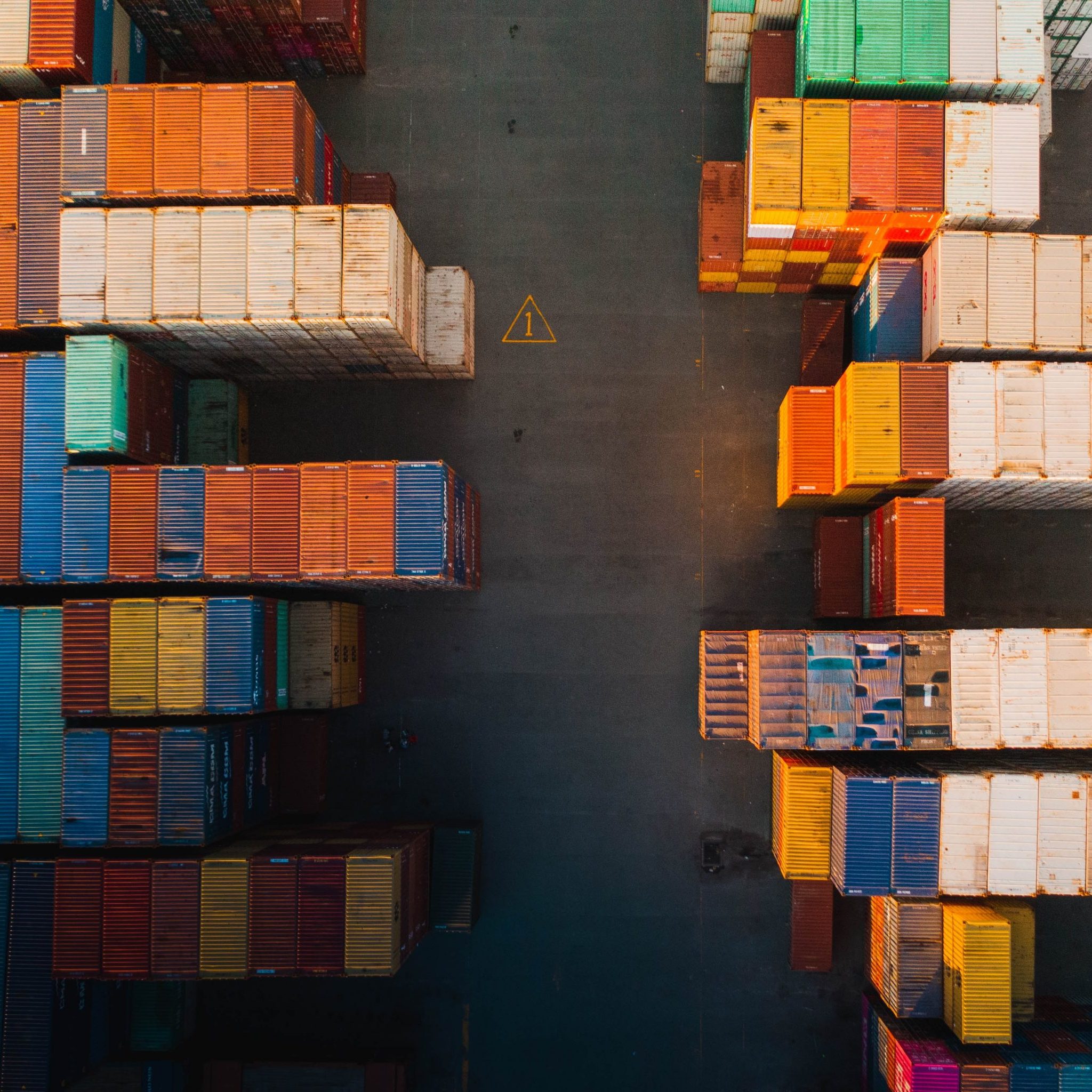
Quite often we face cases where containers with drug, smuggled tobacco, forgeries or any other kind of illegal cargo is seized by the competent authorities causing large expenses to agents, forwarders and carriers. At best, the container is emptied in a bonded warehouse designated by the authorities, giving raise to storages. At worst, cargo is kept inside the container at the terminal, accruing demurrages and storages.
Who should bear the costs?
It depends on each type of case. Here below we go through the most common cases (based on our experience):
1.- Counterfeit or pirated goods suspected of infringing an intellectual property right.
Customs Authority intervenes in the first place, initiating an administrative proceeding ruled by Council Regulation EU 608/2013. Its article 29 makes it clear that the right holder (trademarks) has to assume the storages, handling and destruction costs…etc.
If the goods are destroyed within the administrative proceedings, without the need of initiating a further Court proceeding (art. 23 Council Regulation), the solution for the reimbursement of the expenses is simple = claiming them to the right holder.
If the goods are not destroyed and a subsequent Court proceeding is initiated, it can be either a criminal proceeding between the trademark and cargo receiver or a civil procedure between the same parties.
In the first case, we can follow three different strategies: i) keep on addressing our claim against the trademarks before the criminal Court relying on art. 29 of the Council Regulation, ii) claiming the expenses against the Ministry of Justice in separate proceedings, or iii) if cargo receiver is financially strong, to hold them liable in the criminal proceeding.
Each of these options has pros and cons.
If the parties go to a civil Court procedure, the expenses will have to be claimed against the party applying for the seizure of the cargo (usually, the trademark).
2.- Goods seized by a criminal Court (criminal proceedings).
Goods seized could be the “corpus delicti” (e.g. forgeries or illegal cargo), or other goods used for hiding the corpus delicti.
According to our procedural regulations, the Ministry of Justice is to take care of the custody and destruction of the corpus delicti and should bear the costs. Thus, these expenses should be claimed against the State, it takes time but we count on its solvency.
If we are dealing with the goods used for hiding the corpus delicti, if they have some value, the best we can do is ask the Court to release the seizure order and try and sell them to mitigate the loss. If they have no value, they should be disposed asap, and try and seek redress against the shipper/consignee, if they can be found and are solvent.
3.- Drugs or smuggled tobacco.
Our experience says that “Guardia Civil” (drugs) or Logista (tobacco) take care of its destruction immediately, causing few expenses. Only problem could be the cargo used to hide the drugs or tobacco. If it is the case, it applies the above mentioned.
In drug trafficking, it may happen that the drugs are introduced into the container without shipper/consignee awareness, especially in the import trade of fresh products from South America. Our recommendation is, after the initial shock and confirming cargo receiver’s innocence, to ask the Court for the release of the seizure order over the rightful products in order to be marketed.
A common advice to all cases is being proactive, do not sit on the fence while the expenses increase thinking “someone will pay this”. First thing is minimizing the problem, stop the increase of expenses and then consider to whom our claim should be addressed. Muñoz & Montañés is able and willing to assist you in releasing the containers/cargo and in seeking reimbursement of the expenses.
Muñoz & Montañés, law firm specialized in maritime law, transport and international trade, with offices in Valencia and Bilbao, providing services throughout Spain.
Ship arrest in Spain

Geneva Convention 1999
On 2nd May 2011 Spain adhered to the International Convention on Arrest of Seagoing vessels made in Geneva on the 12th March 1999 (BOE) and it was followed by the denounce of the Brussels Convention 10th May 1952 (BOE 7/10/2011) in force in Spain since 27th February 1956.
The new Convention increases the number of maritime claims which might lead to a vessel’s arrest (including, for instance, insurance premiums and agency commissions), however it narrows down the ships that can be the subject matter of arrest. Thus, in broad terms, only those vessels under the ownership of the debtor could be seized, or, that one which gave rise to the maritime claim just in case this had the condition/nature of privileged claim according to the relevant specific rules. It could then be concluded that services and/or supplies arranged by vessel’s manager would not lead to the arrest.
Spanish Shipping Act, bail requirement
Spanish Shipping Act 14/2014, in force since 25th September 2014, holds some provisions on procedure. It is worth mentioning that a minimum bail of 15% upon the amount of the maritime claim is demanded. It has the purpose of compensating/indemnifying the owner of the ship in the event of her wrongful seizure, as well as a sort of dissuasive measure to avoid undue arrests.
The bail requirement is compulsory in our legal system whilst in other jurisdictions, as in France, it is not.
This minimum 15% for the security works as an objective reference to the applicant and to the Court in that it is difficult to figure the amount of potential damages that might be suffered by the owner. At a later stage, the 15% security can be increased or reduced to try and adjust it to the facts (number of days the vessel was idle due to the arrest, if she was at anchor or berthed, etc.).
On a critical note the eventual damages will not have a direct connection with the amount claimed by the applicant of the arrest. It would have been better to fix a range of minimum and maximum level in absolute figures and not in percentages. As it is, the 15% must be regarded as a mandatory minimum (subject to later adjustment), which would surely be excessive in significant claims.
What happens in practice with the bail requirement?
Now, the question is: “what is happening in the ordinary course of daily court practices?” There is not a common unanimous approach by the various Courts involved. Malaga, for example, sticks to the 15% when ordering the precautionary measure even in cases where the amounts claimed are not important (what means bails around Eur. 4,000/5,000.- in absolute terms), the same happens to orders coming from Courts in Gijon, Vigo, Murcia. However, orders passed by Courts of Seville, Valencia and Palma de Mallorca start from percentages higher than 15% in absolute figures, or from Eur. 7,000 to 60,000.-. In conclusion, this is left for the discretion of the Judge which requires a close follow up on recent decisions.
Muñoz & Montañés, law firm specialized in maritime law, transport and international trade, with offices in Valencia and Bilbao, providing services throughout Spain.
1 Abstract of the intervention of Celia Lopera (Muñoz & Montañés Lawyers) in the National Congress 2017 of the Spanish National Maritime Law Association, “Maritime Act: pending issues to improve or develop. Part II Ships Arrest”. Madrid, 16th June 2017.
Acquittal in a pollution case in Valencia Port

Presentation of the case
MUÑOZ & MONTAÑES was instructed to defend the Master and owners of a container ship in administrative sanctioning proceedings related to pollution.
The facts as follows: the vessel whilst at anchor in the port of Valencia was reported to Capitania Maritima to have an oily stain close to one of her sides. The Master rejected any liability on his part, crew included. However, during berthing manoeuvres in port waters and while deballasting, Master noticed an FO spillage next to ship’s starboard quarter.
A sanctioning administrative file was commenced and the owners had no alternative at that stage but to put up security in the amount requested by Capitania, € 600,000.-, to guarantee the payment of possible fine.
Relevant inquiry followed attended by Capitania inspectors, Class and Flag representatives. As a result it came out that in between the starboard ballast tank and a neighbour bunker tank a little hole of 40 x 40 mm. did exist, what helped ballast to mix up with FO.
The vessel had all certificates in order, Cargo Ship Safety Construction Certificate, as well. Her condition was satisfactory and was well manned and equipped. Master and crew rendered a prompt/efficient collaboration during the investigation.
Resolution, acquittal
After the evidence period was over in the proceedings, the Officer handling the file issued a proposal of decision whereby no sanction was recommended. This proposal was later upheld by the General Directorate of Merchant Marine and the file was in the end shelved.
In both the two decisions, following statements are worth mentioning:
– The Administration failed to prove that the defendants had been acting with any sort of negligence.
– Ballast system did not entail a risk to the environment, thus the people involved in its operative could not reasonably foresee a pollution.
– All certificates were in order and the ballast tanks had been regularly inspected by the Class.
– Master and crew members collaborated with the Administration in the detection of the leak and in control of the spill too.
Muñoz & Montañés, law firm specialized in maritime law, transport and international trade, with offices in Valencia and Bilbao, providing services throughout Spain.
A solution for longstanding cases in Spain
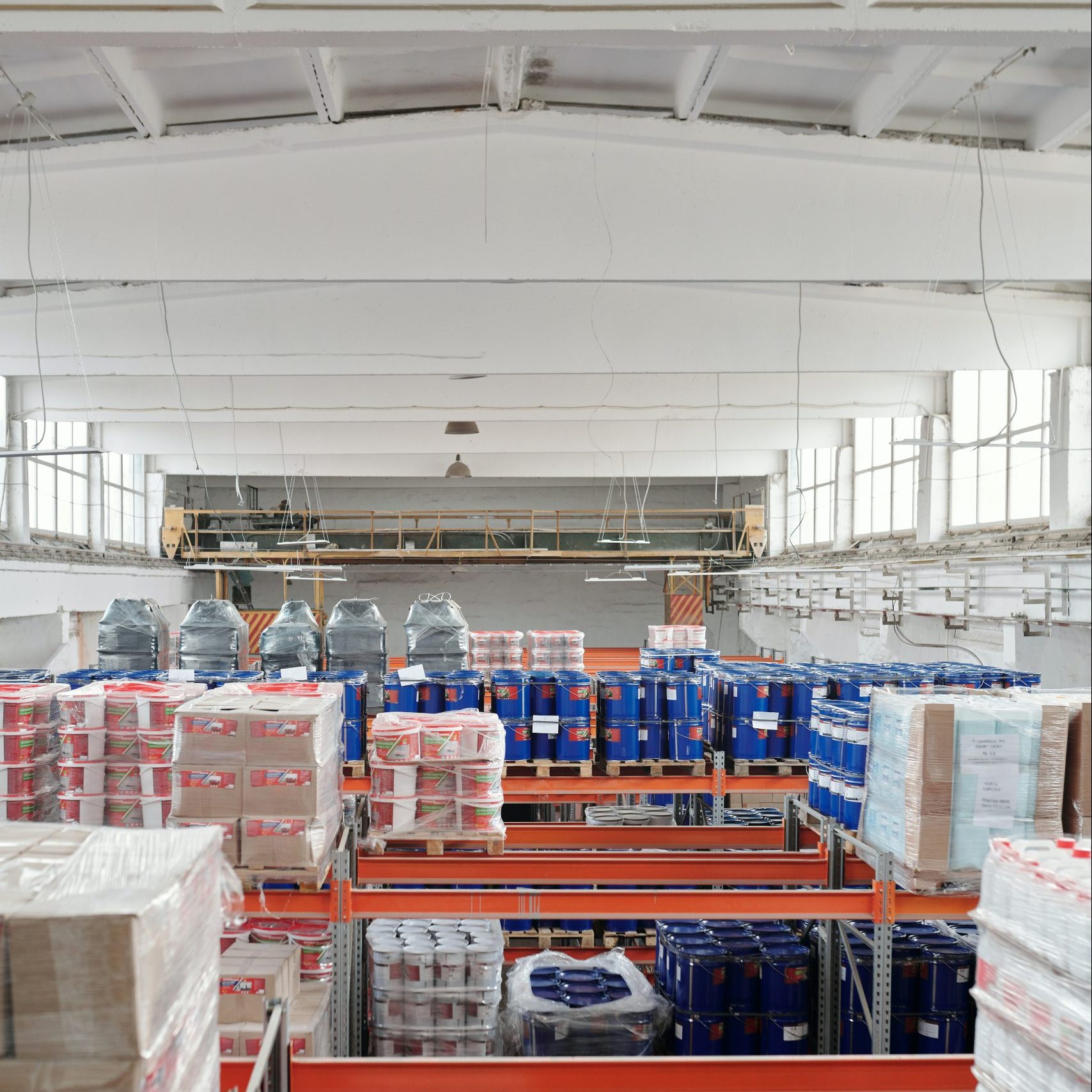
Auction of the cargo before Public Notary
After a few years of implementation of the Spanish Shipping Act, we have now precedents which allow to provide a well-grounded feedback on several topics. One of those is the proceedings before Public Notary to auction abandoned cargo and get settlement of outstanding freight/charges.
– Who can apply for it?
The carrier, whether the actual carrier or the contractual carrier (i.e. freight forwarder), or its agent.
– When is it possible?
When the applicable law to the B/L permits so. For example, English law does permit so.
– Before what Notary should the application be filed?
Although the Shipping Act does not state so, a Notary of the city/place where the cargo remains would be the best option.
– What documents are needed?
B/L, SWB or relevant contract for carriage with the applicable terms and conditions*, sales invoice of the cargo (if available), invoices pending for payment*, appraisal report*, communications with the consignee (if available). If the applicant has no legal representative in the place, a Power of Attorney should be granted.
*Compulsory.
– How is the sale performed?
Cargo can be sold in public auction or through a third party, specialized in the specific trade, who finds a suitable buyer. If the second option is chosen, the Notary will be reluctant to accept the sale for a price below 50% of the appraisal value of the goods.
– Which are the steps to be followed? How long does it take?
Once the application is filed, the Notary requests the consignee to take delivery of the goods and pay any outstanding amount. If the consignee is not found (it usually happens) or does not take delivery/pay within 48 hrs, the Notary declares the cargo in bailment and proceeds with its sale, whether in auction or through a third party.
The whole proceedings can be concluded in one month, but if the public auction is chosen, it can take longer, one or two additional months.
– What happens if the amount obtained does not cover the expenses?
The outstanding balance can still be claimed in Court against Cnee.
– What is the estimate for fees and costs?
Notary fees and costs are in the region of Eur. 800/1,000.
Surveyor fees would depend on the type, amount, value of the cargo, but we would dare say around Eur. 500.-. Storage costs, again it will depend. If the cargo remains inside the container at a terminal, it will depend on terminal’s tariff. If it is in a bounded warehouse, it will depend on the volume/value of the cargo.
In so far as our fees, please feel free to ask for a quotation. Muñoz & Montañés is ready to assist you.
Muñoz & Montañés, law firm specialized in maritime law, transport and international trade, with offices in Valencia and Bilbao, providing services throughout Spain.