

Newsletter




SPANISH CASE LAW: CARRIER’S PERIOD OF RESPONSIBILITY
Hague Visby Rules (HVR) are applicable in Spain and so was recognized by the Spanish Shipping Act dd. 2014. However, when it was enacted, Spanish legislator took the opportunity to complement and modernize the “old” HVR in several aspects. For instance, carrier’s compulsory liability for delay or its period of responsibility. We are now referring in this article to the later topic.
Traditionally the period of responsibility under the HVR has been defined with the expression “tackle-to-tackle” (under lines terms), which covers the duration from when the ship’s tackle first engages the cargo at the loading port to when the cargo is released from the tackle at the discharge port.
Spanish Shipping Act complemented this rule by stating in art. 279:
The carrier’s responsibility for the custody and preservation of the goods covers the period from when it takes charge of them at the port of origin until it makes them available to the consignee or person designated by the consignee at the port of destination. Where port laws or regulations require the intervention of a company or body in the delivery of goods to the carrier for transport, or from the carrier to the consignee, the carrier shall not be liable for the period during which the goods are in the custody of such companies or bodies.
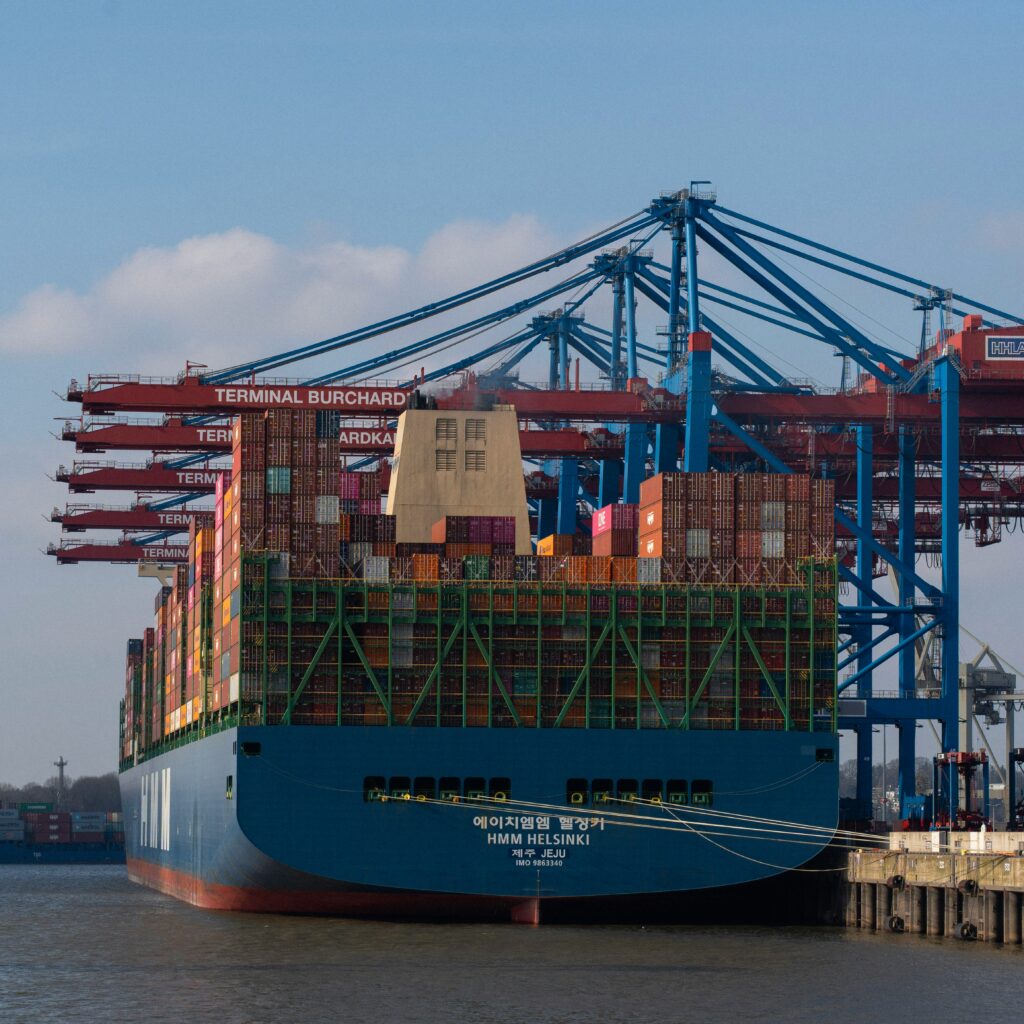
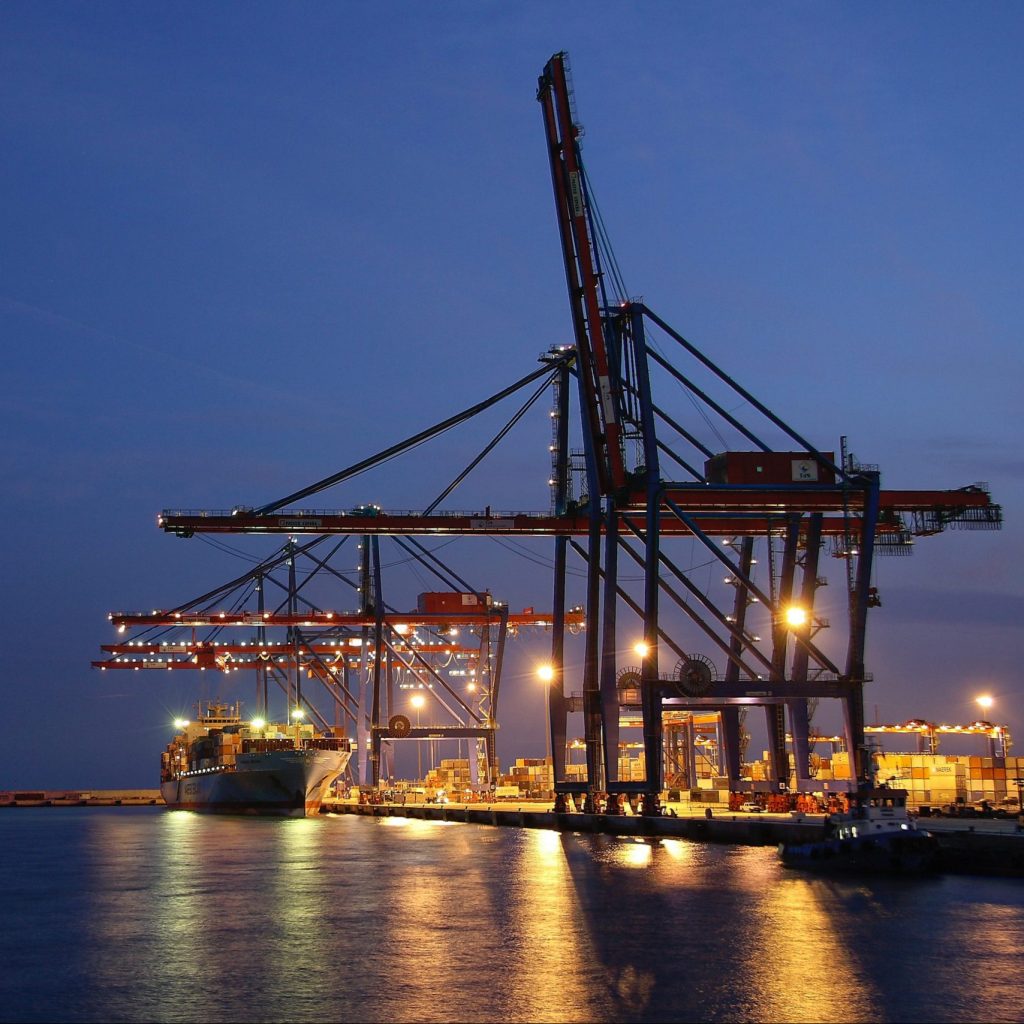
High Court of Valencia recently had the opportunity to construe this article in a cargo claim filed by cargo underwriter against the carrier who was represented by Muñoz & Montañes. It was a “port-to-port” shipment from Valencia to Ashdod of a reefer container loaded with frozen lamb at -18ºC.
Container was discharged at the Terminal and moved to a bonded depot three days afterwards. The unit remained at the depot for two weeks waiting for custom clearance. It was at this time when temperature alteration occurred, but it was not immediately noticed. When failure was detected, the cargo was completely defrosted and useless. The depot had invoiced storage, connections and reefer monitoring to the consignee.
Following art. 279, and despite the fact that it was a carrier owned container, Court ruled that the cargo was not under carrier’s custody and it would have been the depot’s duty to report the reefer malfunction in time, so consignee could have taken preventive measures to avoid cargo damage.
Muñoz & Montañés, law firm specialized in maritime law, transport and international trade, with offices in Valencia and Bilbao, providing services throughout Spain.
SHIP ARREST IN SPAIN FOR BUNKER’S SUPPLY – CASE LAW.

Case study:
A Chinese shipowner of container vessels time chartered one of his ladies (Chinese flag) to a European company. Charterer got into financial difficulties and did not honor several bunker supplies to different companies around the world.
In each supply, Captain had signed the bunker delivery note, as customary.
Vessel happened to call at the port of Valencia, where she was arrested for two different claims for unpaid bunker invoices. Those invoices had been addressed, as customary, to:
“The vessel / Master / Owner / Manager / Operator / Time charterer with its full details.”
In both cases, after releasing the arrest by putting up the relevant security, the shipowner filed an opposition for wrongful arrest, advised by our partner, Alicia Montañés, and our associate, Paloma Attard.
Applicable regulations:
- International Convention on arrest of ships, Geneva 1999 (the Convention).
- International Convention on maritime liens and mortgages, Geneva 1993.
- Spanish Shipping Act 14/2014 and Civil Procedural Act 1/2000.
Court resolution:
Oppositions were filed relying on art. 3 of the Convention, in that the actual debtor was neither the owner nor the demise charterer and the maritime claim was not secured by a maritime lien. Arrest was not permissible in light of art. 3.1.e) and 3.3 of the Convention.
Claimant counter-argued that the shipowner was jointly and severally liable of the debt because: i) Captain had signed the bunker delivery note on shipowner’s behalf, becoming bound by the terms of the bunker supply contract, ii) shipowner committed a fault in supervising time-charterer’s financial strength (“culpa in vigilando”), iii) there was unjust enrichment as the bunkers supplied remained on board at the time of the redelivery and shipowner did use them at the end.
While the oppositions were dismissed ab initio by the first instance Court (same Judge who granted the arrest), the High Court of Valencia recently admitted the oppositions, released the arrests (securities posted) and condemned the applicant to compensate the shipowner for the loss and damages suffered, including the legal costs.
The rationale of the High Court resolution can be summarized as follows:
- Bunker supply is a maritime claim, as listed in art. 1 of the Convention but not a maritime lien. Therefore, arrest is only permissible when the debtor is the owner or demise charterer.
- As per the documentary evidence, the debtor of the bunker supplies was the time charterer. The time C/P and art. 204 of the Spanish Shipping Act foresees that, under a time charter, the charterer is responsible for the bunker supplies.
- Captain’s signature on the bunker delivery note does not make “per se” the shipowner jointly and severally liable for the supply.
- The fault in supervising as well as the unjust enrichment were raised by the applicant after the arrests were granted, as new arguments, so they could not be taken into account by the Judge.
In conclusion:
- Although the Convention increases the number of maritime claims, article 3 limits the right of arrest to: i) claims against the owner / demise charterer, or ii) claims secured by a maritime lien (listed in art. 4 of the International Convention on maritime liens and mortgages, Geneva 1993).
- The regime of the International Convention Relating to the Arrest of Sea-Going Ships 1952 is more favorable to claimants’ interests, while the Convention regime, in force in Spain, is more favorable to shipowners’, even if Spain is not a shipowner’s country.
- To avoid or try and avoid the literalism of the above-mentioned art. 3, all arguments should be raised in the ship arrest application.
Footnote:
Apart from the maritime liens listed in art. 4 of the International Convention on maritime liens and mortgages, Geneva 1993, Spain, relying on art. 6 of the same Convention, included claims for wreck removal as a maritime lien. And, in the near future, claims for ship’s supplies and repairs as well as agency fees and services will be also secured with a maritime lien.
Muñoz & Montañés, law firm specialized in maritime law, transport and international trade, with offices in Valencia and Bilbao, providing services throughout Spain.
DEVELOPING OFFSHORE RENEWABLE ENERGY IN SPAIN

In December 2021 the Spanish Government approved the Roadmap for the development of Offshore Wind and Renewable Energies. Full English version is accessible here.
The Royal Decree 150/2023 of 28 February approved the intended uses for the five geographical areas into which the Spanish maritime space is divided. This regulation delimits the ‘Areas of high potential for the development of offshore wind energy’ identifying their following common characteristics:
– Wind resource reaches values greater than 7.5 m/s wind speed (at 100 m height for the four peninsular marine demarcations, and at 140 m height in the Canary DM).
– Depth does not exceed 1,000 m. (The minimum bathymetry values are in the Canary Islands at 50 – 80 metres).
– They are located close to an area on land with adequate electrical infrastructures for transferring the energy generated.
Royal Decree 962/2024, of 24 September is moving forward by approving the legal framework for offshore renewable energy installations (wind and non-wind). The process will include public participation phases that will help defining the technical and operational bases. Its approval will require a competitive process with two exceptions: i) innovative offshore installations located outside the designated optimal zones and with a capacity of less than 50 MW and ii) installations located in Zones I (inside port waters) and II (outside port waters) of the Ports of General Interest.
Muñoz & Montañés, law firm specialized in maritime law, transport and international trade, with offices in Valencia and Bilbao, providing services throughout Spain.
To whom should be claimed the costs of cargo seized by Courts?
A few years ago, this issue was already dealt with in our Newsletter about “THE PROBLEM OF CONTAINERS / GOODS SEIZED BY SPANISH AUTHORITIES”.
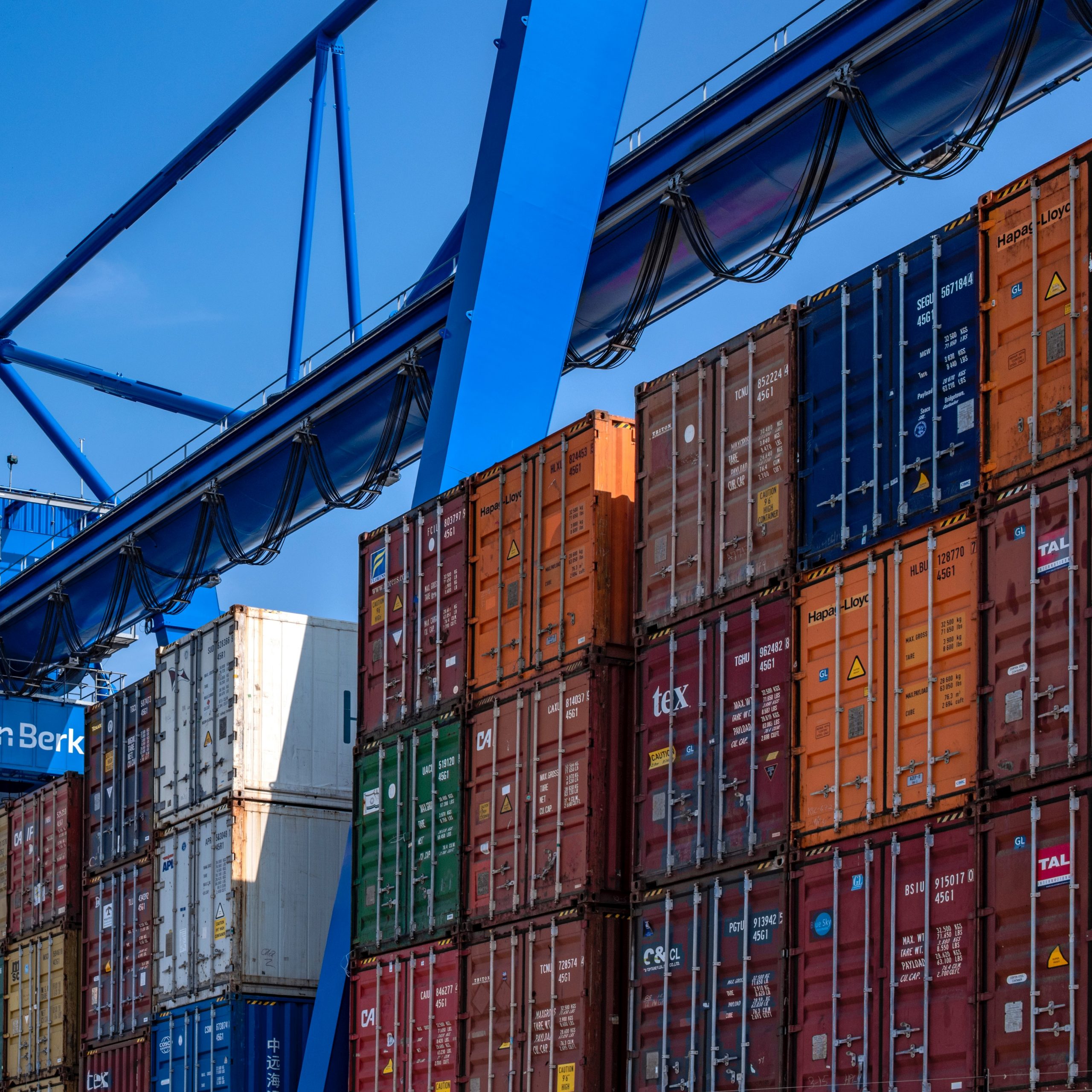
The topic is in the limelight again. Custom Authorities in Spain are thoroughly controlling exports of vehicles and/or spare parts inside containers, especially to Africa. After Custom’s inspection, depending on cargo condition, a possible offence for illegal transfer of waste might be reported to a Criminal Court, and the goods be retained at Court’s disposal.
Recently, Muñoz & Montañés has obtained a favorable ruling in a claim against the Spanish Administration for the expenses generated by four containers, stuffed with counterfeit products seized in a criminal proceeding.
The items claimed were storage and demurrage expenses at the port, transport and handling expenses for transferring the cargo to a bonded warehouse, subsequent storage and destruction. These costs were generated from February 2012 to October 2015. It was a considerable amount.
The Judgment upholds the claim in full.
The rationale is as follows: The Ministry of Justice has to take care of what it is known as “corpus delicti”, for example, forgeries, spare parts or the weapon used in an assault. For this purpose, there are “judicial warehouses” across Spain. In an ideal world, as soon as the corpus delicti is retained at Judge’s disposal, it should be transferred to these warehouses.
In practice, when we talk about full containers or trucks loaded with illegal cargo, the above-mentioned does not happen, mainly because there is not enough space in such judicial warehouses.
What this ruling tells us is that whoever has been forced to bear the storage costs, and even disposal, has the right to claim them against the Administration, since, in the ideal world we were talking about, it should have been the Administration who have had to assume them in the first place.
Obviously, the expenses must be documentary evidenced.
It should be pointed out that it is not necessary to wait until the criminal proceedings are over to claim the reimbursement. As soon as the expenses cease and they are well documented, the claim can be initiated.
Muñoz & Montañés is looking forward to advice you in this type of matters and to manage the reimbursement of the expenses incurred.
Law firm specialized in maritime law, transport and international trade, with offices in Valencia and Bilbao, providing services throughout Spain.
A GUIDE FOR TIME BAR IN SPANISH TRANSPORT REGULATIONS

This article sets out a practical guide of the different time bar terms in Spanish transport regulations for all parties involved in the logistics chain.
We will focus on cargo claims against the carrier and carrier’s action to claim freight and other expenses.
SHIPPING CARRIAGE:
Domestic:
- 1 year for cargo claims (loss, damages or delay) as from the delivery of the goods to the consignee or since they should have been delivered. This is a “prescripción” deadline, its characteristics will be explained later herebelow.
- 1 year for the carrier to claim for freight and other expenses as from the transport or service is provided. This is also a “prescripcion” deadline.
International:
- 1 year for cargo claims (loss or damages) against the carrier, as from the delivery of the goods to the consignee or since they should have been delivered. This is a “caducidad” deadline, its significance will be explained later herebelow.
- 1 year to claim freight and other carriage expenses since the transport or service is provided. This is a “prescripcion” deadline.
Additionally, both for national and international carriages:
- When the contractual carrier (i.e. forwarder) settles a cargo claim, it is granted with another 1 year period from settlement date (“prescripción”) to seek recovery against the actual carrier (i.e. shipping company).
- A cargo claim may be brought directly against the port terminal. In this case the time bar will be 2 years (“prescripción”) since the goods were delivered by the terminal.
INLAND & RAIL TRANSPORT:
National:
- 1 year** (“prescripción”) for cargo claims as from:
- the delivery of the goods to the consignee, in case of partial loss, damage or delay.
- 20 days after the date agreed for the delivery to the consignee or, if no delivery date is agreed, 30 days after the carrier has taken over the goods, in case of total loss.
In the event of willful misconduct/ gross negligence, time bar will be 2 years (“prescripcion”).
- 1 year** (“prescripción”) to claim freight due and other transport charges. Starting time: three months after the conclusion of the contract of carriage or from the day on which the action could be brought, whichever is later.
International:
- 1 year** (“prescripción”) for cargo claims as from:
- the delivery of the goods to the consignee, in case of partial loss, damage or delay.
- 30 days after the date agreed for the delivery to the consignee or, if no delivery date is agreed, 60 days after the carrier has taken over the goods, in case of total loss.
- 1 year** (“prescripción”) to claim freight due and other inland transport charges. This term commences 30 days after delivery of the goods at destination.
In case of willful misconduct/gross negligence, time bar will be 3 years.
**In these cases, a letter of claim against the inland carrier or sender suspends the 1 year time bar, BUT if the carrier/sender rejects such claim in writing, time bar will be resumed and no further interruption will be admitted, except filing the claim in Court.
AIR TRANSPORT:
International:
- 2 years (“caducidad”) for cargo claims as from the date of arrival or the date in which the goods should have arrived. Important: to preserve cargo interests’ rights, a letter of protest must be addressed to the carrier within 14 days as from the date of arrival or the date in which the cargo should have arrived
Montreal Convention does not regulate the term to claim for freight and other transport expenses. Subsidiary a 5 years’ time bar should be applicable as per Spanish Civil Code.
Regarding the differences between:
Prescripcion: It can be interrupted through written communication. Time bar will start to run afresh each time a written claim is submitted.
Caducidad: It cannot be interrupted or suspended; however, it can be extended by the carrier’s agreement.
Muñoz & Montañés, Law firm specialized in maritime law, transport and international trade, with offices in Valencia and Bilbao, providing services throughout Spain.
PRELIMINARY RULING ON JURISDICTION CLAUSE BY THE EUROPEAN COURT OF JUSTICE

In 2014, the Spanish Shipping Act introduced new regulations hindering the validity of jurisdiction and arbitration clauses, which were acknowledged as abusive and detrimental. Article 468 demands individual and separate negotiation of the clause whilst article 251 provides that a third-party holder of a bill of lading is assigned in all the shipper’s rights and actions documented in the bill except for the jurisdiction or arbitration clause which should be explicitly accepted.
Some appeal Courts in Spain follow the argument that, when the action is brought by the consignee (or any endorsee), his individual negotiation and acceptance of the clause is always required, even if the clause refers to the jurisdiction of an EU state party. This is something extraordinary in international practice and in common use of bills of lading. However, it can also be a breach of EU Regulation 1215/2012 which provides its own means of showing consent within its scope of application.
Muñoz & Montañes is assisting the Carrier in three different ongoing proceedings where the Court of appeal recently agreed to apply for respective preliminary rulings to the European Court of Justice. The ECJ has been requested to review if Spanish domestic requisites have preference over EU Regulations when the action is brought by the Consignee or other third-party holder. ECJ judgement of 9th November 2000 in Coreck Maritime GmbH vs. Handelsveem BV and others (C-387/98) may not be sufficient as it contemplated the full assignment of shipper’s rights & obligations towards the third party.
We expect the ECJ will bring some common sense to this issue although we must recall that it would only be relevant for EU jurisdiction clauses where Regulation 1215/2012 applies.
We will update the article with the content of the ECJ resolution, in due course.
Muñoz & Montañés, law firm specialized in maritime law, transport and international trade, with offices in Valencia and Bilbao, providing services throughout Spain.
Bunker’s arrest in Spain

Spain is part to the International Convention on Arrest of Ships 1999. Although this Convention increases the number of maritime claims which might lead to a vessel’s arrest, on the other hand, it narrows down the ships that can be detained. In broad terms, ship arrest is feasible only against those vessels owned by the debtor or, when the maritime claim alleged is considered a maritime lien as per Geneva Convention 1993.
In practice, in Spain it is not always easy to apply for this effective measure.
The alternative when the debtor is either the operator or the time charterer of a vessel and our credit is not a maritime lien, is the seizure of the bunkers on board (on the assumption the debtor is the owner).
The procedure is not as simple as with the ship arrest, but the effectiveness is quite the same.
Main points to be considered would be:
- The application should be filed few days in advance to vessel’s call, so the Court has time to go through the application and give consideration to it.
- Fairness of the claim should be preliminary evidenced as well as the impossibility to collect the amount due by other means (no vessels under debtor’s ownership, company domiciled in a tax haven, no other assets seizable…etc.).
- A counter security would be requested by the Court to enforce the arrest (around 15% of the amount claimed).
If the arrest is granted and enforced, in normal circumstances, the debtor honors the amount due. In the negative, the applicant has to discharge the bunkers from the vessel and deposit them ashore at his own risk and expense. Such costs can be claimed to the debtor afterwards.
Muñoz & Montañés has recently succeeded in a bunker’s arrest application, achieving client’s goal: collecting an outstanding debt of more than Eur 200 K.
For any question or doubt on anything related to the above mentioned, please feel free to contact us on +34 963673812 or despacho@munozmontanes.com.
Muñoz & Montañés, law firm specialized in maritime law, transport and international trade, with offices in Valencia and Bilbao, providing services throughout Spain.
Intended amendments to the Spanish Shipping Act and the Act about ports and Merchant Marine

A draft bill to amend the two main shipping regulations in Spain has recently been published by the General Directorate of Merchant Marine (GDMM). It affects the Act 2/2011 about ports and merchant marine, which deals with the public and administrative aspects of shipping, and the Shipping Act 14/2014, which addresses the private/commercial aspects (it was widely analyzed in our previous this article).
This Newsletter highlights those purported changes that we find it more relevant for the industry:
Act 2/2011 about ports and merchant marine:
1) Regulation of unmanned/autonomous vessels, which is limited to define what an unmanned/autonomous vessel is and what requirements should meet to navigate Spanish waters. At our advice, this is just a first approach to the matter, to be developed along with the technological advances.
2) In so far as sanctioning proceedings (for example as a result of a pollution case or infringement of certain rules) and the security requested to release the vessel and guarantee the payment of the fine, it leaves open the possibility for the GDMM to accept a P&I LOU, instead of a cash deposit or bank guarantee, not as a rule but on case-by-case basis.
3) For Spanish shipping companies whose vessels sail hot spot areas for piracy, they will be allowed to engage private armed guards.
Spanish shipping Act 14/2014:
1) Maritime claims for supplies and repairs to be secured by a maritime lien on the vessel, as foreseen in art. 6 of the International Convention on Maritime Liens and Mortgages 1993.
If materialized, this amend will broaden the possibilities to arrest vessels in Spain pursuant art. 3 of the International Convention on Arrest of Ships 1999, applicable in our country.
2) Minimum security needed to enforce a ship arrest (15% of the amount claimed) is suppressed, leaving the exact amount up to Judge’s decision, considering the circumstances of the case.
The idea is to reduce such amount and facilitate the exercise of this effective measure by the creditors.
3) Seaworthiness of the vessel is to be maintained by the carrier as long as the contract of carriage is in force.
This is in clear contradiction to art. III.1 of the Hague-Visby Rules and it being an International Convention in force in our country, it should prevail over the intended amendment.
4) The restrictions for the validity of the jurisdiction clauses inserted on Bs/L (commented in our previous Newsletter), are extended to the choice of law. This is, they will not be valid unless singularly negotiated and accepted by the Shipper and/or Consignee, what in practice is nearly impossible to achieve.
5) In collision cases, where the two or more vessels involved are in fault, current art. 342 of the Shipping act establishes their joint and several liability to third parties not only for death and personal injuries damages but also for material damages. The proposed amendment limits the joint liability to death and personal injuries, in line with art. 4 of the Convention for the Unification of Certain Rules of Law with respect to Collisions between Vessels 1910.
Muñoz & Montañés, law firm specialized in maritime law, transport and international trade, with offices in Valencia and Bilbao, providing services throughout Spain.
Time bar under the Spanish Shipping Act

Remarkable difference with Art. III.6 HVR. Case law.
When the Spanish Shipping Act entered into force, back in September 2014, we advised in our Newsletter that some time would be needed to see how our Courts construe its contents, particularly in those aspects where our regulation is not totally aligned with the applicable international conventions.
One example is the regulation concerning the time bar period for cargo claims.
According to art. III.6 of the Hague Visby Rules (HVR), unless a Court claim is filed against the carrier within one year of delivery of the cargo or of the date when it should have been delivered, the action is barred.
Under Spanish law, the time bar period which does not admit an interruption unless by filing a Court claim is called “caducidad”. A clear example of it is the aforementioned art. III.6 HVR.
Whereas the time bar period which admits its renewal by sending an out of court claim (e.g. a registered letter, courier or even an email message) is called “prescripción”.
Well then, Spanish Shipping Act when ruling the time bar period for cargo claims, speaks about 1-year term of “prescripción”, in contradiction to art. III.6 HVR. Our First Instance Courts and Courts of Appeal have respected the contents of the International Convention so far and have considered this time bar period as “caducidad”.
However, there is a new trend among some First Instance Courts, for example Commercial Court of Madrid and Palma de Mallorca, which construe that the applicable time bar for cargo claims is “prescripción”, and is subject to be renewed by the claimant year by year without the need of submitting a Court claim.
Those resolutions might be overruled by their respective Courts of Appeal, but it is something to have in mind. Spain is a cargo country, and our Courts tend to protect such interests.
Muñoz & Montañés, law firm specialized in maritime law, transport and international trade, with offices in Valencia and Bilbao, providing services throughout Spain.