

Newsletter


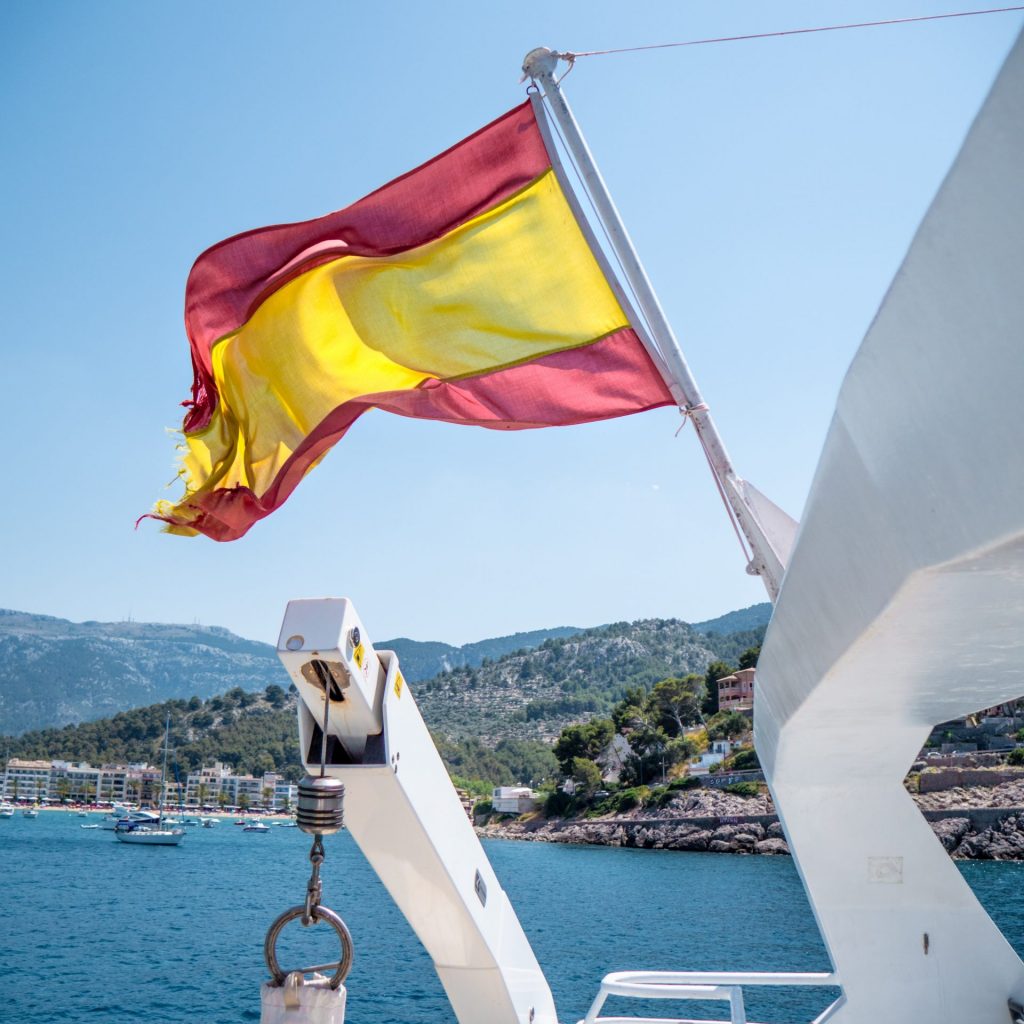


Yacht charter bureaucracy in Spain is reduced and clarified
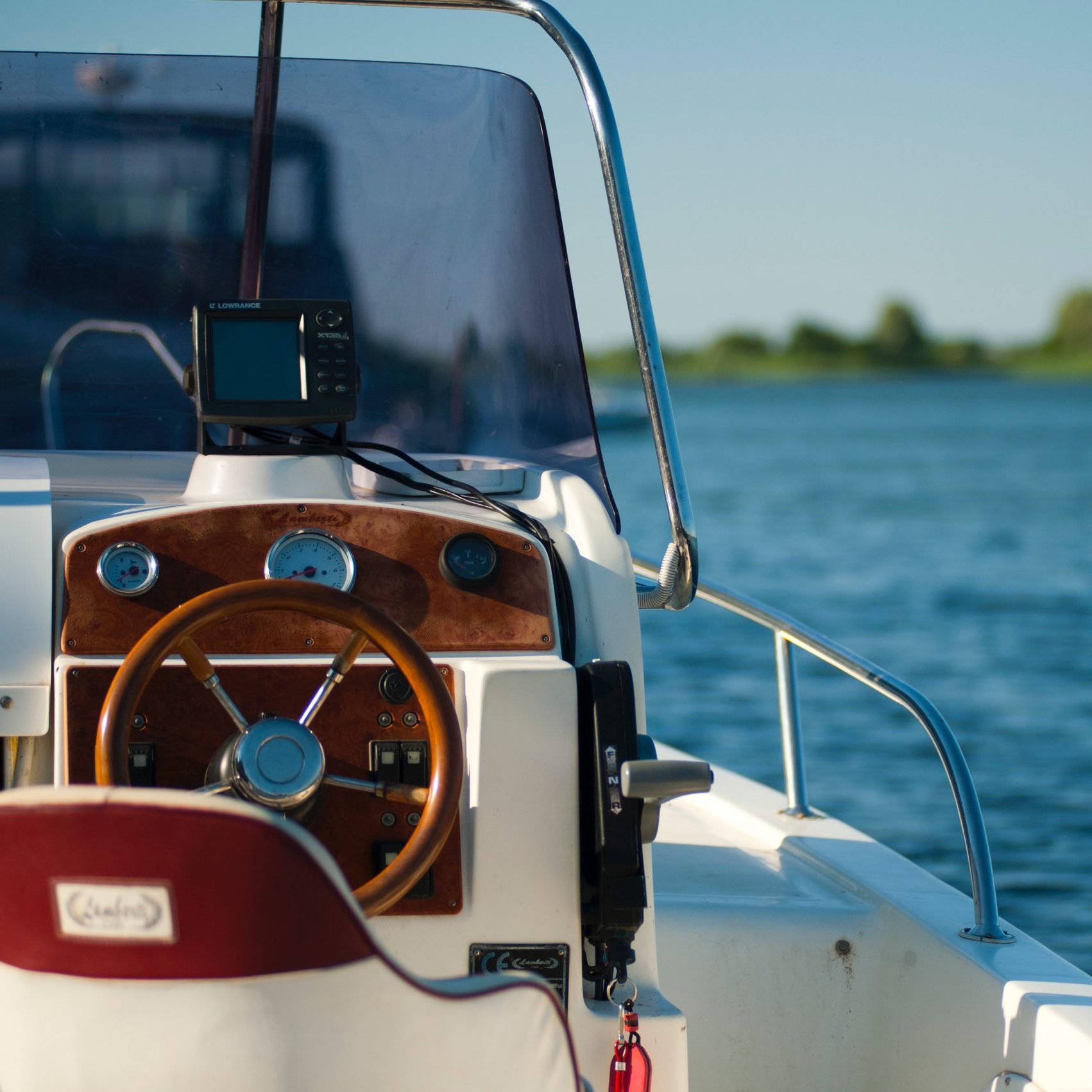
On July 8th 2019 the General Directorate of Merchant Marine (DGMM) issued an Internal Instruction No. 10/2019 on “nautical charter“. This is a major step forward in modernizing and simplifying the bureaucracy in the yacht charter business in Spain.
Most remarkable developments can be summarized as follows:
– Authorities will not request documents which are already in their possession.
– Original documents or sworn translations will not be required (private translations will be valid).
– Clearance for chartered pleasure boats (less than 24 meters length) is unified and simplified, distinguishing between Spanish flag boats, or not, and with or without professional skipper/crew on board.
– A “Megayacht Database” (BDMY) is created to speed up clearance of chartered yachts (over 24 meters length) in Spanish waters.
– It clarifies and extends the duration of the clearance for chartered yacht / pleasure boats in each case.
No doubt this new regulation will give a further impulse to the charter business in Spain, by reducing its bureaucracy. Many thanks to the Spanish Yachting Association (ANEN) for their tireless work!
The above-mentioned instruction should be added to an informative release issued on October ‘18 by the AEAT (Spanish Tax Agency) about the entry and exit of yachts from the Customs Territory of the European Union. The AEAT’s release clarifies that a yacht entering or leaving Spanish territorial waters no longer needs to file a declaration with Spanish Customs when certain requirements are met.
For further clarification, please feel free to contact us.
Muñoz & Montañés, law firm specialized in maritime law, transport and international trade, with offices in Valencia and Bilbao, providing services throughout Spain.
Validity of a jurisdiction clause towards a forwarder not part to the SWB

Interesting resolution issued by the High Court of Justice of Valencia on November 2019. It challenges the jurisdiction of Spanish Courts in a cargo claim dispute, accepting the validity of a jurisdiction clause towards a forwarder not part to the SWB.
Presentation of the case
The sea voyage between Nansha (China) and Valencia (Spain) was evidenced in non-printed sea waybill (SWB), without the reverse side, whose front page referred to the terms and conditions published at carrier’s web site. These terms and conditions included a jurisdiction clause in favor of the High Court of London.
The forwarder, who acted on behalf of the consignee, was the book by and invoicing party but did not appear in the SWB. The claim against the carrier was brought by the forwarder’s underwriter.
Spanish Court resolution
The interest of the resolution is double:
– Although the reverse side is not incorporated to the SWB, the Court of Appeal finds that the referral to the terms and conditions of the web site is enough for the validity of the jurisdiction clause as per art. 25.1.b) and c) of Regulation (EU) No 1215/2012.
– Even if the forwarder was not part to the SWB, the carrier managed to evidence that it booked the shipment and was well aware of carrier’s terms and conditions. Thus the jurisdiction clause is found valid towards the forwarder. In this regard, it was of essence the wording of the booking note.
For further information, please contact us.
Muñoz & Montañés, law firm specialized in maritime law, transport and international trade, with offices in Valencia and Bilbao, providing services throughout Spain.
The expenses connected to a pollution case, marine casualty or incident
This Newsletter is about the expenses connected to a pollution case, marine casualty or marine incident, for the initial response. Assuming that, for those non-urgent operations, the Owner/P&I will take control of the situation.
Regulation
Article 268 of the Spanish Act 2/2011 on Spanish Ports and Merchant Marine regulates SASEMAR’s (Coast Guard in Spain) purpose. Its paragraph 4 states that in pollution cases, marine casualties or marine incidents, a security might be requested by the competent Authorities in order to cover the expenses incurred by SASEMAR or any third party (private company) that participated in managing the pollution, casualty or incident. While the security is not posted, the vessel is detained.
When dealing with SASEMAR regarding the settlement of the above-mentioned expenses, the dispute is usually limited to the reasonability of the means deployed, actions taken, and the time devoted to deal with the emergency. The reason is double: i) SASEMAR’s tariffs are public , known beforehand, and ii) SASEMAR issues daily reports about its intervention in any particular case, detailing thoroughly any action taken.
Controversy
Problem arises in Spain when the Port Authorities involve private companies in the management of the incident, when SASEMAR has limited resources in the area or needs external support.
Common sense would lead us to think that the same Authority will monitor their intervention, supervising the actions taken and the means used, oversee their tariffs according to market prices, pay the expenses due and collect them from the liable party or the security.
Our experience says
Unfortunately, our experience in this kind of cases has taught us that practice is different. Not only because the competent Authority does not follow up private companies’ intervention (Authority is only focused on resolving the emergency asap), but also because when the time to pay comes, the Authority encourages the private company to address its claim directly against the Owner/P&I, as if it was an ordinary civil claim without nothing to do with the administration. We even faced a case in which the Authority threatened vessel’s interests to enforce the security to pay the private company without any previous proceedings where the parties could, at least, discuss the reasonability of the invoices based on supporting documentation.
At the end, having a security of a considerable amount put up in place makes (forces) Owner/P&I enter into negotiations with the third party.
The above practice is not only contrary to common sense but also contrary to our legal principles / regulations:
– The Administration has the duty to protect, preserve and restore the public domain. In a pollution case, for example, the Administration will request the liable party to restore the affected area. In the negative, the Administration will restore and seek reimbursement of the expenses against the liable party. If an urgent/immediate response is needed, the Administration acts first and then seeks reimbursement.
– If the pollution case, marine casualty or marine incident, gives raise to an administrative sanctioning proceedings, there is an specific regulation which states that a subsidiary proceedings has to be initiated in order to determine the exact compensation for damages. Compensation will include the costs and expenses incurred to manage the situation and restore the public domain.
Recommendations
In view of the above mentioned, our recommendations would be:
– Being proactive. Assume the lead in the operations if possible or work closely with SASEMAR and the relevant authority to monitor in firsthand the measures taken and influence their decisions to be efficient and cost-effective. If a private company is needed, it is better to be contracted by the Owner/P&I.
– If the operations have already been entrusted to a private company, appoint an expert to follow up their work.
– When facing a claim from a private company, invite them to re-address it to the competent Authority.
– Request the Authority to follow the path established for administrative sanctioning proceedings.
For further information, please contact us.
Muñoz & Montañés, law firm specialized in maritime law, transport and international trade, with offices in Valencia and Bilbao, providing services throughout Spain.
Sulphur directive and sanctioning proceedings in Spain
After a few years of implementation of the so-called Sulphur Directive (Directive EU 2016/802) and its limits on the maximum Sulphur content of marine fuels, the shipping industry can be satisfied for the levels of compliance achieved. According to the Report issued by the European Commission on the subject matter, for the period 1st January 2015 – 31st December 2017, only 5% of the inspections, from a total of 28.000, resulted in a non-compliance. This report shows the efforts of the industry, to contribute to reducing air pollution, but also the effort of the Member States, for the significant increase of monitoring and enforcing Sulphur standards.
The situation in Spain
We now want to focus on Spain and how our Authorities have implemented the Directive, particularly the penalties foreseen in its art. 18. Back in the period 2005-2010, our country had a well-deserved fame for being very severe in the PSC inspections and in the high sanctions imposed for the deficiencies found on board (in the region of Eur. 50,000.-).
Fortunately, this approach has changed. Our experiences in sanctioning proceedings initiated as a consequence of a non-compliance with the Sulphur Directive is that the penalties range between Eur. 5,000.- to 10,000.-, depending on the circumstances of the case (e.g.: the % of Sulphur over the limit or the period of time that the “substandard” fuel has been burnt). It should be noted that, according to the applicable regulation, the fines could reach Eur. 180,000.-, considering this non-compliance a severe infringement.
The detention of the vessel
Said that, the main inconvenience in this kind of proceedings is the detention of the vessel once the deficiency is found. The requirements for releasing the vessel are: i) put up a cash deposit or Bank Guarantee, to ensure the payment of the future fine and, ii) designation of an address in Spain by all the eventual liable parties, in these cases the Captain and the Operator/”Armador”. This last requirement can simply be accomplished by the appearance of the Captain before the Harbour Master/“Capitán Marítimo” and making the designation on his and Operator’s behalf. For further information about the release of a vessel after her detention by Spanish Authorities, please visit our previous this article.
Luckily, an infringement of the Sulphur Directive is not considered, for obvious reasons, marine pollution. Should it be the case, the liable parties would be also the registered owner and the P&I, and the designation of an address by both of them becomes much more difficult (an specific PoA duly legalized is needed).
Muñoz & Montañés will be ready to assist you at any Spanish Port. Please feel free to contact us.
Muñoz & Montañés, law firm specialized in maritime law, transport and international trade, with offices in Valencia and Bilbao, providing services throughout Spain.
Places of refuge in Spain, regulation and practical approach

Just after the Directive 2002/59/EC that set the basis of the European regulation on the places of refuge entered into force (August 2002), the M/T PRESTIGE disaster occurred. The management of the crisis by the General Director of Merchant Marine (GDMM) was objectionable, so to speak.
Applicable regulation of the places of refuge in Spain
The referred Directive was later on implemented in Spain by the Royal Decree 210/2004. Just in time to meet the deadline fixed by EU. Should this regulation would have been in force when the accident took place, maybe its consequences had been different.
In a recent case in the North of Spain, the Authorities gave shelter to a car carrier (MODERN EXPRESS) heavily listed in the Gulf of Biscay.
The competent body to decide on a request of assistance by a ship in distress is the GDMM. There is no special requirement to submit the request of assistance by either the Captain, the owner or its representative (orally, by email, in writing). A priori, the Authority is obliged to issue a grounded resolution in writing within 96 hours (maximum).
Security: bank guarantee, LOU not accepted
Main requirement to be completed by a vessel accessing a place of refuge in Spain is to put up a security (Bank Guarantee) issued by an entity domiciled in Spain with a certain wording and subject to Spanish law and jurisdiction. For the time being, Club LoU is not foreseen as a valid security. This bank guarantee can be lodged by the “operator”, owner or salvage company, or shipper/owner or consignee of the cargo.
The guarantee is intended to cover: i) any damages caused by the vessel or her cargo, ii) the expenses incurred to avoid/minimize the damages, iii) the costs of the cargo or wreck removal and, iv) environmental restoration.
Amount of the guarantee
The amount of the guarantee would depend on the type of vessel:
– Tanker vessels up to 2.000 GT: guarantee up to 7 million Euros. For each GT in excess of 2.000 GT, up to Eur. 10,000.- more.
– Other kind of vessels up to 2.000 GT: guarantee up to 2.5 million Euros. For each GT in excess of 2.000 GT, up to Eur. 600.- more.
For instance, in the above mentioned case, GDMM fixed the maximum amount (Eur. 21,590,600.- for a 33,831.- GT vessel) and it was covered by the P&I.
Lastly, we would like to point out that according to art. 299 of the Spanish Act 2/2011 on Spanish Ports and Merchant Marine, the issuance of the Bank Guarantee is not a condition sine qua non to permit the entrance to a place of refuge.
Muñoz & Montañés, law firm specialized in maritime law, transport and international trade, with offices in Valencia and Bilbao, providing services throughout Spain.
Seller obligations with regards to the contract of carriage under Incoterm EXW/FCA

Incoterms Ex-works and FCA mean no obligations (or least obligations) for the exporter with regards to the carriage of the goods sold. However, this assertion is not absolute and sometimes we find cases where an exporter under Exw or FCA is claimed for liabilities derived from or connected to the contract of carriage. In this article we analyze those cases and give some recommendations.
General obligations under Incoterm Exw/FCA
In Exw the seller fulfills his duties making the goods available to the carrier at a named place, while in FCA, as a rule, the seller is bound to load the cargo into the vehicle designated by the buyer in origin1.
First common obligation of the exporter under Exw and FCA is the packaging and marking of the goods. An improper packaging can cause problems during the carriage, mainly when it is perishable cargo. Also a defective preparation of the pallets can lead on to casualties during transport, because of overturning, friction or collapse.
Mistakes in the marking can provoke delays in customs inspection (and re-marking extra-costs), losses in distribution centre or simply demurrages.
In both cases, the seller will be liable towards the buyer for the prejudices caused.
Common mistakes and their remedies
As mentioned, under Incoterm Exw the seller assumes no obligation of loading the cargo on the means of transport. However, in practice, the seller often loads the goods onto the vehicle. In this regard Incoterm 2020 states that “risk of loss or damage to the goods occurring while the loading operation is carried out by the seller, as it may well be, might arguably lie with the buyer, who has not physically participated in the loading”, which means that, even if the seller effectively loads the cargo, the buyer will assume the risks for an improper stowage inside the container or truck (overturning, temperature, humidity or ventilation problems).
In order to avoid these situations, which can lead to conflicts between seller and buyer, it is advisable to make things clear or agree FCA.
Another issue in Exw and FCA sales is the linkage of the exporter with the carrier under the contract of carriage.
A priori, if we stick to the Incoterm rules, Exw and FCA seller has no obligation of transport. But again, practice shows up that it is not always like that. We should recall that the sales contract and the contract of carriage are two different agreements which bind different parties (seller-buyer; shipper/consignee-carrier). What it is agreed in one contract does not necessarily affect the content of the other contract.
If we refer to maritime transport, on countless occasions Exw and FCA seller appears as shipper in the B/L, although it expressly indicates “freight collect”. The fact that the seller is part of the B/L, being aware of that, has an important consequence, as he will be bound by its clauses, conferring him rights but also obligations.
In line with the above mentioned, if the buyer/consignee rejects the cargo or even disappears and does not take delivery of it, shipping company will be entitled to request the seller/shipper for: i) taking over the goods, and, ii) assuming all expenses generated (mainly storages and demurrages); regardless whether the freight is prepaid or collect.
Our recommendation for the seller would be, unless strictly necessary, not being part of the B/L or, at least, not giving the consent to appear.
Road transport regulations and Incoterms Exw/FCA
In so far as road carriage, Spanish Act 15/2009 about contract of carriage by road can lead to some misunderstandings/conflicts.
Art. 4 of the referred Act defines the parties intervening in such contracts as follows:
“1. “Cargador2” is who contracts on his own behalf the carriage and against who the carrier assumes the obligation to perform it.
(…)
4. “Expedidor” is the third party acting on behalf of the shipper who delivers the goods to the carrier…”
Although it could be confusing, “cargador” is strictly the one who contracts the carriage, not the one who loads the cargo in the vehicle, as it literally means in Spanish.
Thus, if a company sells Exw or FCA and does not intervene in the organization of the transportation apart from just delivering the merchandise to the carrier in the agreed place, such company will be considered “expedidor” and not “cargador”.
On the other hand, with regards to the obligation of payment of the carriage charges, art. 37 states:
– If nothing is agreed, the “cargador” is responsible for payment.
– If “charges collect” is agreed, consignee is responsible for payment as from the moment he accepts the goods. “Nevertheless, the “cargador” will be subsidiary liable in case consignee fails to pay.”
According to this last sentence, the “cargador” (the one who contracts the carriage and not who delivers the cargo to the carrier in origin) will always have the obligation to settle the carriage charges.
Under the circumstances, our recommendation to Exw and FCA sales in which the seller is not involved in the contract of carriage, is the latter to identify himself in the CMR as “expedidor”.
Muñoz & Montañés, law firm specialized in maritime law, transport and international trade, with offices in Valencia and Bilbao, providing services throughout Spain.
1 Exception made to cases where the place of delivery is different from seller’s premises. In those cases the seller has no obligation of loading the cargo.
2 In English, shipper.
Salvage proceedings under the Spanish Shipping Act

Salvage in Spain before the Shipping Act
Up to the entry into force of the Spanish Shipping Act on September 2014, Salvage proceedings in Spain were ruled by the Act 60/1962. Three characteristics of these proceedings should be pointed out:
1) Maritime Courts, within the Ministry of Defense and led by Military Judges, are the competent bodies to handle salvage proceedings.
2) Although handled by Maritime “Courts”, these are administrative entities not actual courts.
3) Maritime Judges have the competence to arrest the assisted vessel at any moment (always within an Spanish port), requesting the Owner for a counter-security to release her (cash deposit or bank guarantee, Club’s LOU are not admitted unless accepted by the salvors). The amount of the counter-security is discretionally fixed by the Judge taking into account only the value of the vessel, bunkers, cargo…etc, and not the circumstances of the assistance. In practice, the amount varies between 10 and 20% of the value of the vessel and other property onboard.
Such preventive measure can be taken by the Maritime Judge at his own initiative, and the Salvors will not need to put up any security. We could say that the Salvors have their interests protected “for free”.
Spanish Shipping Act
The new Spanish Shipping Act has now introduced the jurisdiction of Commercial Courts to hear Salvage disputes, as an option for the parties. In other words, Parties will be able to opt for:
– Maritime Courts, following the administrative proceedings above referred, with the certainty that the vessel will be arrested unless a considerable amount of money or bank guarantee is put in place.
– Commercial Courts, following the Spanish Civil Procedural Law and the Geneva Convention 1999 on Ship Arrest. In this case, Salvors would have to apply for the arrest of the vessel and it will not be granted until a security is constituted. The amount of the security is 15% of the amount claimed.
– If no agreement can be reached between both parties, the jurisdiction of Commercial Courts shall prevail.
Under the circumstances, we would dare say that this is a good change for Owners interests in respect of salvage proceedings.
Said that, another development is that the Spanish Shipping Act expressly permits the Salvors to exercise a lien over the vessel and other property salved at the first port of arrival until counter-security is put up. This is in line with art. 21.3 of the Convention on Salvage 1989.
The question is that in practice in Spain, it is not clear how such lien can be exercised by the Salvors over the vessel. Can they do it by themselves? Or Do they need to obtain an arrest order from the Maritime Courts or Commercial Courts? Time and practice will say.
In any case, in order to protect Owners interests we would always recommend challenging the competence of Maritime Courts.
Muñoz & Montañés, law firm specialized in maritime law, transport and international trade, with offices in Valencia and Bilbao, providing services throughout Spain.
Counterfeit products and the expenses caused, Regulation CE 608/2013
Introduction to the regulation on counterfeit products
On 1st January 2014 entered into force Regulation CE 608/2013 concerning customs enforcement of intellectual property rights which repeals former Regulation CE 1383/03.
This regulation sets the proceedings to customs authorities and right holders (brands) for the detention and management of counterfeit products which enter or are located within the EU territory.
Costs generated by counterfeir products
Contrary to expectations and contrary to what it seems to say this regulation at first glance, it is not clear that logistic operators (mainly agents and forwarders) are entitled to be reimbursed by the brands for all the expenses caused due to the detention of the forgeries by Customs Authorities.
Whereas 24 states: “Costs and damages incurred by persons other than customs authorities as a result of a customs action, (…), should be governed by the specific legislation applicable in each particular case”.
We might consider that the “specific legislation” referred is the Regulation itself, but it is not the case and, for the time being, there is no such specific regulation.
If we focus on art. 29, it states that the brand shall reimburse customs authorities, or other parties acting on behalf of customs authorities, for storage, handling and destruction of the goods.
In other words, Regulation seems to make a distinction between “persons other than customs authorities” (whereas 24) and “parties acting on behalf of customs authorities” (art. 29).
The crux of the matter would be to determine whether those parties who lodge the summary or definite declaration of the goods in his own name (declarant), and to whom customs authorities order the detention and tally of the forgeries, their storage in a determine warehouse and even their destruction, could be regarded as if they were acting on behalf of the customs authorities or not.
Our perspective
We hold a positive view to that question. When the agent or forwarder requests the positioning of a container for its inspection, empties the unit in a bond warehouse or destructs the goods, he is doing it following customs authorities instructions.
In any case, we will have to wait for the contents of that “specific legislation” mentioned in whereas 24 or, in its absence, for what it is interpreted by the Courts.
Muñoz & Montañés, law firm specialized in maritime law, transport and international trade, with offices in Valencia and Bilbao, providing services throughout Spain.
Shipowner’s insolvency, vessel’s arrest, maritime liens. Spanish perspective

Hanjin’s insolvency has hit the shipping industry. Although rumors about her financial difficulties were heard long ago, it seems that no one was ready and it is affecting many key players in the shipping business and international trade.
Consequences in Spain of ship-owner’s insolvency
In this article we would like to briefly analyze the consequences in Spain of a foreign1 ship-owner’s insolvency with regards to his fleet and the measures that could be taken by his creditors.
Applicable regulations
International insolvency regulations are mainly contained in:
– UNCITRAL Model Law on Cross-Border Insolvency. Spain is not part of this Convention.
– EU Regulation 2015/848 on insolvency proceedings, which of course is in force in our country, but limited to insolvency proceedings in other Member States.
On the other side, Ship Arrest Convention 1999 and Geneva Convention 1993 on Maritime Liens and Mortgages (MLM) are applicable in Spain. No provision regarding the insolvency of the ship-owner or debtor is foreseen in any of both International Conventions.
The question is, what happens to a vessel owned by a foreign company declared insolvent when calling at any Spanish port? Could she be arrested and sold?
Should the company be incorporated under the laws of an EU country, the answer would be yes relying on art. 8 of EU Regulation 2015/848, but limited to the claims guaranteed with a right in rem.
Following question arises, what are the claims privileged with a right in rem over a vessel in Spain?
– The ones listed in art. 4 of MLM Convention:
a) wages and other sums due to crew members including costs of repatriation and social insurance contribution,
b) claims in respect of loss of life or personal injury,
c) reward for the salvage of the vessel,
d) port canal and other waterway dues and pilotage due,
e) claims based on tort arising out of physical loss or damage caused by the operation of the vessel other than loss of or damage to cargo, containers and passengers’ effects carried on the vessel.
– Expenses for wreck removal in Spanish waters incurred by the Spanish Authorities.
Under the circumstances, not all the maritime claims listed in art. 1 of the Ship Arrest Convention 1999 permit the arrest and forced sale of a vessel owned by a company declared insolvent.
What would be the answer where a company is domiciled in a third state, not being Spain part of the UNCITRAL Model Law?
Spanish domestic Insolvency Act establishes a proceedings for the recognition and enforcement of foreign (non EU) insolvency proceedings in Spain, via exequatur, and its effects would be determined by the Law of the State where such insolvency proceedings is opened. However, there is an exception to that rule which is that the claims guaranteed with a right in rem will not be subject to the Law where the insolvency proceedings is opened but to the Law where the asset is located.
Then the reply would be yes for a vessel located in Spain provided that the requirements set in the Arrest and MLM Convention are met. The solution is similar to the provision contained in art. 8 of EU Regulation 2015/848.
Spanish insolvency Act
Without prejudice of the above mentioned, Spanish Insolvency Act also foresees the possibility to adopt precautionary measures over the assets located in Spain owned by a foreign insolvent company. Such precautionary measures could consist on staying any enforcement proceedings or forced sale of debtor’s assets.
Lastly, it should be noted that both EU Regulation 2015/848 and Spanish Insolvency Act state that the effects of insolvency proceedings on the rights of the debtor in immoveable property, a ship or an aircraft subject to registration in a public register shall be determined by the law of the Member State under the authority of which the register is kept and not subject to the Law of the country where the insolvency proceedings is opened. It refers to mortgages, “hypothèques” and other registrable charges.
1 Whether from another EU or non EU country.
Muñoz & Montañés, law firm specialized in maritime law, transport and international trade, with offices in Valencia and Bilbao, providing services throughout Spain.